What Is a First Braces Appointment?
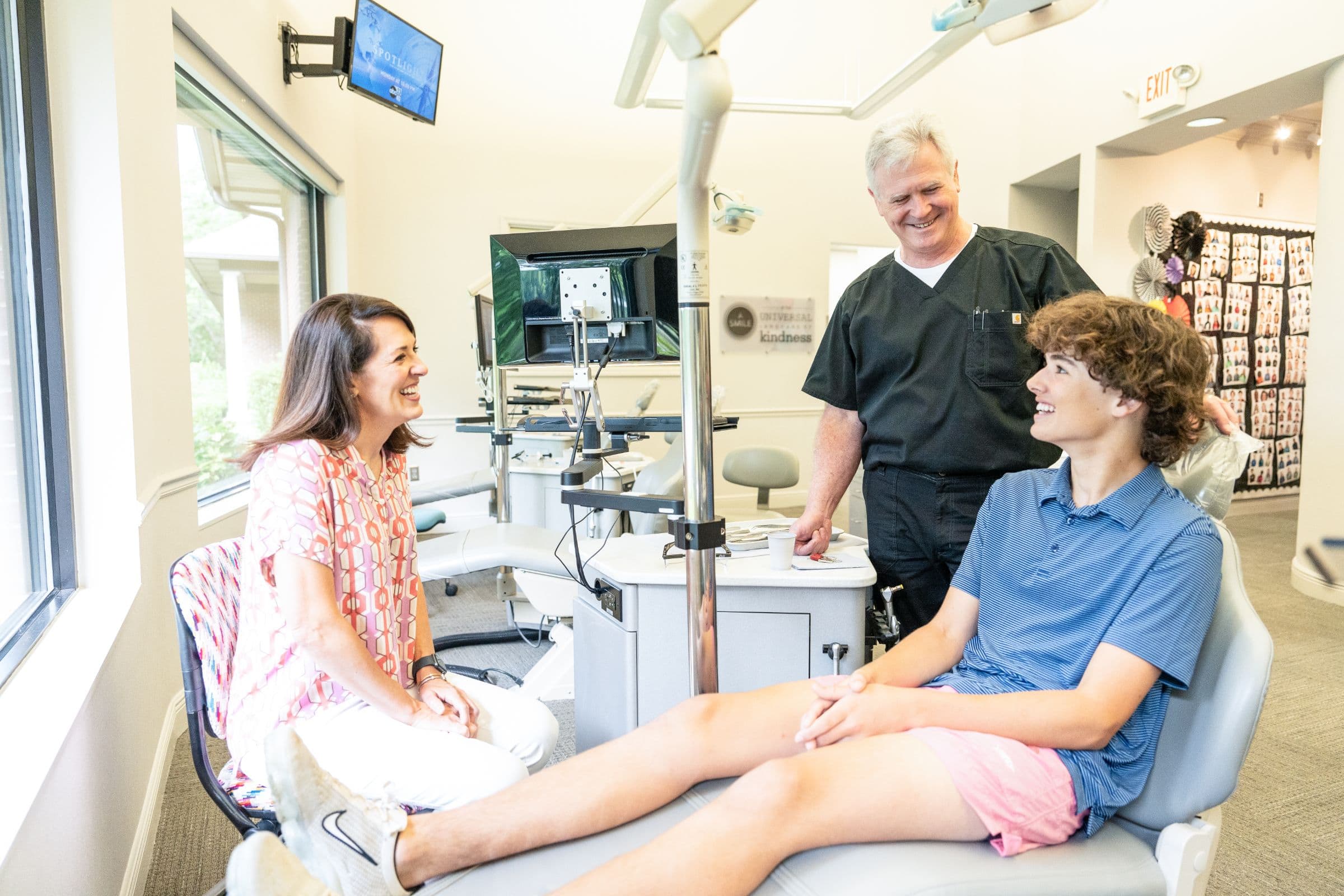
Your first braces visit includes a thorough exam, digital records of your teeth and bite, and an honest conversation about your treatment plan. Dr. Mike Upton looks at how your teeth fit together, explains your options, and walks through timing and cost. Braces usually aren’t placed that same day.
That’s the part most families don’t realize. The free consult is the fact-finding visit. The bonding visit is when your braces actually go on.
A free consult typically runs 30 to 60 minutes. Bonding takes longer, usually 60 to 90 minutes, because each bracket is placed one at a time with care.
Bring these three things to your first visit:
- Your dental insurance card
- Any referral notes, X-rays, or records from your family dentist
- A written list of questions (yes, write them down, you’ll forget otherwise)
At RiverView Orthodontics, your first free consultation comes with no obligation and no pressure. You’ll leave knowing where your smile stands. And if the timing isn’t right to begin treatment yet, that’s a perfectly fine answer too.

What Happens During the Visit
Your first visit follows six clear steps: check-in and health history, digital X-rays and photos, a clinical exam of your teeth and bite, a review of findings with Dr. Upton, a discussion of timeline and flexible payment options, then scheduling your bonding visit. Most families are in and out within an hour.
Step 1: What Happens at Check-In?
Our friendly team greets you, gathers your medical and dental history, and reviews your insurance benefits. Tell us about grinding, jaw clicking, thumb sucking, or mouth breathing. Those small details shape the plan. Paperwork is short, and we can send most of it to you ahead of time so check-in moves quickly.
Step 2: What Records Are Taken During Digital X-rays, Photos, and a 3D Scan?
Next, we capture records. That means digital X-rays, a set of photos, and often a scan with our iTero Element scanner, which builds a detailed 3D layout of your mouth, gums, and teeth. It’s quick and comfortable, usually 10 to 15 minutes, and no goopy trays are needed in most cases.
Step 3: What Does the Clinical Exam Cover?
Dr. Upton examines your teeth, bite, jaw joints, gum health, and airway. He checks how your upper and lower teeth meet, measures crowding or spacing, and looks at how your jaws are growing (especially important for kids).
Step 4: How Are Findings and Treatment Options Reviewed?
Now the good part. You’ll see your images on screen while Dr. Upton explains what he found in plain language. He’ll lay out your choices, which may include:
- Traditional metal braces with In-Ovation® self-ligating brackets, sturdy + reliable
- Clear braces that blend with your teeth, more subtle than metal
- Invisalign® or spark® clear aligners, flexible & clear
Step 5: How Are Timeline, Fees, and Flexible Payment Options Discussed?
A treatment coordinator sits down with you to go over estimated treatment length, total fees, what your insurance covers, and monthly options. We’ll work with your budget to make treatment affordable for your family. Ask as many questions as you like about the numbers, because nothing is decided until you feel comfortable.
Step 6: What Happens Before You Leave?
Finally, we schedule your bonding visit and review what to expect, including foods to skip and how to brush around brackets. In some cases, we can start the same day, which saves you a trip.
Why the First Appointment Matters
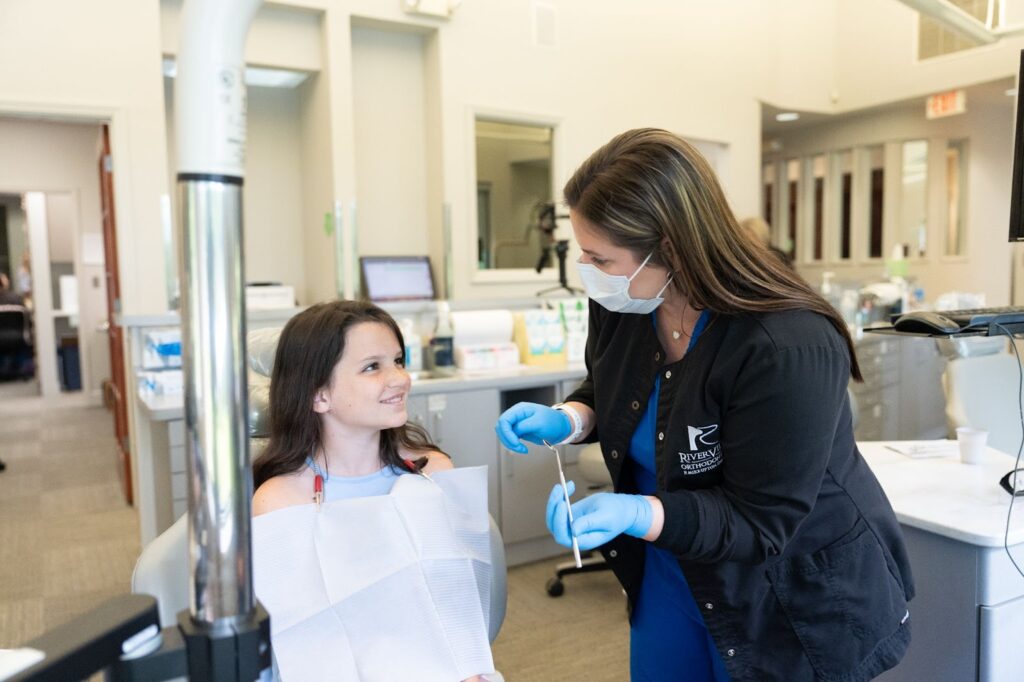
This visit does more than answer “do I need braces?” It sets the baseline that guides every adjustment that follows.
Here’s what you gain from it:
- A permanent record. Your X-rays, photos, and scan become the reference point Dr. Upton compares against throughout your treatment.
- Early detection. Crowding, crossbites, extra or missing teeth, and jaw growth concerns are far easier to manage when they’re caught early.
- Clarity on options. You’ll understand the real trade-offs between metal braces, clear braces, and clear aligners before you decide anything.
- A clear number. No guessing. You leave with a treatment estimate, an insurance breakdown, and monthly figures.
- Less worry. Kids and teens relax once they know what’s coming. Most are surprised by how easy the visit is.
Parents, we totally get your concerns. You want honest answers and no hard sell. Your family is our family, and that’s exactly how this visit feels. Take the information home, talk it over at the kitchen table, and call us when you have follow-up questions.
Consultation Visit vs. Braces Placement Visit
These are two separate visits with different purposes. The free consult gathers information and builds your plan. The bonding visit puts your braces on.
| Free Consult Visit | Braces Placement (Bonding) Visit | |
|---|---|---|
| Purpose | Exam, records, diagnosis, plan review | Attach brackets and wires |
| Typical length | 30 to 60 minutes | 60 to 90 minutes |
| What happens | Health history, X-rays, photos, 3D scan, exam, options and fees discussion | Teeth polished, surfaces prepared, brackets bonded, wire placed |
| Cost | Free at RiverView Orthodontics, no obligation | Applied toward your total treatment fee |
| Comfort | Completely comfortable, nothing invasive | No needles, no drilling; mild soreness starts hours later |
Records may be taken at either visit depending on your case. Straightforward cases often get everything done at the free exam, so you can save time and receive your Invisalign or braces the same day. More complex bites sometimes need extra imaging before Dr. Upton finalizes the plan.
After bonding, you’ll come in for adjustment visits roughly every 6 to 10 weeks. Those are short, usually 20 to 30 minutes, and involve wire changes or small tweaks that keep your teeth moving on schedule.
What the First Appointment Costs and What Affects Treatment Fees
Many initial orthodontic consultations are complimentary, including the first free consultation at RiverView Orthodontics. There’s no charge and no obligation. Total treatment fees, however, vary based on how complex your case is, how long you’ll be in treatment, which treatment option you choose, and your age when you start.
| Factor | How It Affects Your Fee |
|---|---|
| Case complexity | Mild crowding costs less to correct than a significant bite issue |
| Treatment length | Longer treatment means more visits and higher total cost |
| Treatment option | Metal braces, clear braces, and clear aligners are priced differently |
| Age at start | Early treatment in kids is sometimes done in shorter phases |
| Records and imaging | Some practices bill X-rays and records separately |
Most dental insurance plans that include orthodontic benefits pay a lifetime maximum toward braces or aligners rather than a yearly percentage. Our team verifies your benefits before you commit, so there are no surprises later.
FSA and HSA dollars typically cover orthodontic treatment too. Check with your plan administrator to confirm how your funds can be applied, since rules on contribution limits, rollover, and deadlines differ from plan to plan.
We also offer flexible payment options with a down payment and monthly amounts built around your budget. Tell us what works for your family, and we’ll do our best to match it.
Who Should Schedule a First Braces Appointment
The American Association of Orthodontists recommends that every child have a first orthodontic evaluation by age 7. By that age, enough permanent teeth have come in for Dr. Upton to spot subtle issues with jaw growth and emerging teeth, even when baby teeth are still hanging around.
Watch for these signs at any age:
- Crowded, overlapping, or crooked teeth
- Noticeable gaps between teeth
- An overbite, underbite, or crossbite
- Teeth that don’t meet properly when biting down
- Early or very late loss of baby teeth
- Jaw shifting, clicking, or difficulty chewing
- Mouth breathing or persistent thumb sucking
Teens are the most common candidates, usually once most permanent teeth have erupted. Adults can start at any age, as long as gums and supporting bone are healthy. Dr. Upton treats children, teens, and adults every week.
A few situations call for care first. Active cavities, untreated gum disease, or teeth needing restoration should be handled by your family dentist before braces go on. Complex bite and jaw discrepancies may need coordinated planning with an oral specialist, and jaw joint symptoms may warrant a TMJ evaluation.
Not sure which category you fall into? That’s exactly what the free consult is for.
Dr. Mike Upton, DMD, MS, has practiced along the Black Warrior River since 2005, bringing two decades of experience transforming smiles. Becoming an orthodontist isn’t common: out of 100 dental school graduates, on average only six go on to specialize. Dr. Upton completed 11 years of training to get here, including four years of college, four years of dental school, and a three-year orthodontics residency.
Our offices welcome children, teens, and adults into a comfortable and relaxing atmosphere where you’ll be treated like family. That means unhurried explanations, straight answers about cost, and a team that remembers your name.
Your first free consultation is an easy first step. Request your free consult whenever you’re ready, from our family to yours.
Frequently Asked Questions
Does getting braces put on hurt?
No. There are no needles and no drilling involved in bonding braces. Your teeth are polished, the surfaces are prepared, and brackets are attached with a special adhesive. Mild soreness usually shows up about 4 to 6 hours later as your teeth begin to shift, and it fades within a few days.
How long does it take to get braces on?
Plan on 60 to 90 minutes for your bonding visit. Each bracket is positioned individually for accuracy, which takes time and patience. You’ll also spend a few minutes learning how to brush, floss, and eat with your new braces before you head out.
Can I eat before my appointment?
Yes, eat a normal meal beforehand. Your teeth will feel tender that evening, so stock up on soft foods ahead of time: yogurt, mashed potatoes, smoothies, soup, scrambled eggs, and pasta. Skip anything hard, crunchy, sticky, or chewy for the first several days.
Do I need a referral from my dentist?
Typically no. You can schedule a free consult with Dr. Upton directly without a referral. Many families are referred by their family dentist, and we’re always glad to coordinate with them, but a referral isn’t required to get started.
Should I get a dental cleaning before braces?
Yes, a recent cleaning is ideal. Starting with clean, healthy teeth and gums makes brushing around brackets easier and lowers your risk of decay during treatment. If it’s been more than six months since your last cleaning, book one with your family dentist before your bonding visit.
What questions should I ask the orthodontist at the first visit?
Bring your list. Good ones include: What’s causing my bite issue? Which treatment options would work for my case, and why? How long will treatment take? How often will I need visits? What’s the total cost, and what will my insurance cover? What happens after braces come off? Dr. Upton would rather answer twenty questions now than have you wondering later.