
Choosing the right orthodontist shapes your smile for a lifetime, so the decision deserves careful thought. Whether you’re a parent researching braces for your child, a teen weighing Invisalign, or an adult finally ready for a straighter smile, finding the right specialist comes down to credentials, treatment options, technology, and how comfortable you feel in the chair.
This guide walks you through what separates a true specialist from a general dentist, how to vet local practices, and the questions worth asking before you commit to care that will shape your smile for years to come.
What Is an Orthodontist (and How They Differ From a General Dentist)
An orthodontist is a dental specialist who completes 2–3 years of additional residency training after earning a DMD or DDS degree. That extra training focuses entirely on tooth movement, jaw alignment, bite correction, and facial development. A general dentist handles cleanings, fillings, and overall oral health. An orthodontist focuses on straightening teeth and correcting bites. Both play important roles, but they are not the same.
Only a small fraction of dental graduates go on to become orthodontists. The American Board of Orthodontics (ABO) certification is another credential worth looking for, since it signals the specialist has met rigorous voluntary standards beyond basic licensure.
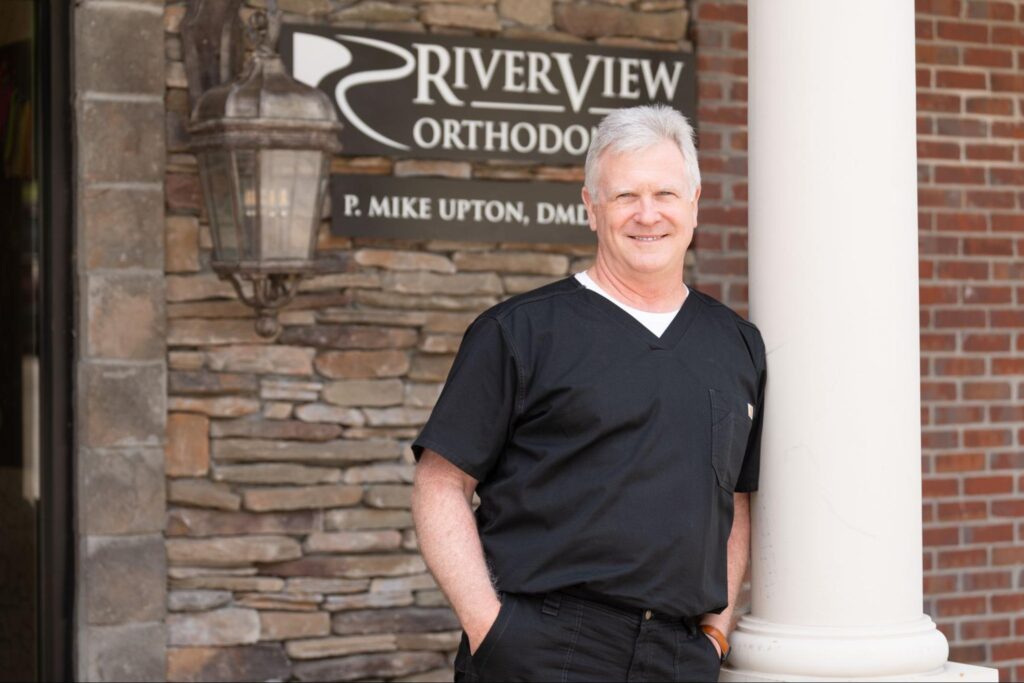
While some general dentists offer short-term aligner treatments, a specialist is trained to handle the full picture, including crowding, spacing, overbites, underbites, crossbites, jaw misalignment, and TMJ issues. At RiverView Orthodontics, Dr. Mike Upton has focused on orthodontics for many years, bringing specialist-level care to families across the region.
How to Vet an Orthodontist: The Selection Process Step-by-Step
Choosing well takes a little homework. Here’s a straightforward process to help you compare practices without feeling overwhelmed.
- Verify credentials and licensing. Confirm the provider is a licensed orthodontist (not a general dentist offering ortho), check for ABO board certification, and review their residency training. Dr. Upton completed specialty training in orthodontics after dental school.
- Review the treatment options offered. A strong practice should offer a full menu of choices, including traditional metal braces, clear braces, Invisalign® or spark® clear aligners, orthodontic solutions for complex bite issues, TADs (temporary anchorage devices), and support for TMJ/TMD concerns.
- Schedule free consultations with one or two practices. A free consult lets you meet the orthodontist, tour the comfortable and relaxing atmosphere, and get a feel for the team before committing. RiverView Orthodontics offers a first free consultation with no obligation.
- Evaluate the technology. Modern tools like digital scanners, 3D imaging, and in-house 3D printing make treatment faster, more precise, and more comfortable than older methods.
- Assess the office culture and location. Visit the office. Talk to the friendly team. Notice how children and teens are treated. Convenience of location, parking, and visit times also factor in because you’ll be returning every 4–8 weeks for months.
10 Qualities of a Great Orthodontist
Not every practice is created equal. When you’re researching the best orthodontist for your family, look for these qualities that separate standout practices from the rest.
Is the Orthodontist Board-Certified and Specialty-Trained?
Board certification by the American Board of Orthodontics is a voluntary credential that signals a higher standard of expertise. A true orthodontist has completed years of focused residency beyond dental school, not a weekend course in short-term aligners. This specialist training translates directly to better outcomes, especially for complex cases involving bite correction, jaw growth, or crowded teeth.
- Board-certified or board-eligible by the American Board of Orthodontics.
- Specialist training, not just general dentistry.
- Offers treatment for children, teens, and adults. A full-service practice can care for your whole family under one roof.
- Full range of treatment options. From traditional metal braces to Invisalign® clear aligners, every smile is different.
- Modern technology. Digital scanners (like iTero), 3D imaging, and in-house 3D printing create a more comfortable and precise experience than impression trays and guesswork.
Does the Practice Communicate Clearly and Have a Welcoming Team?
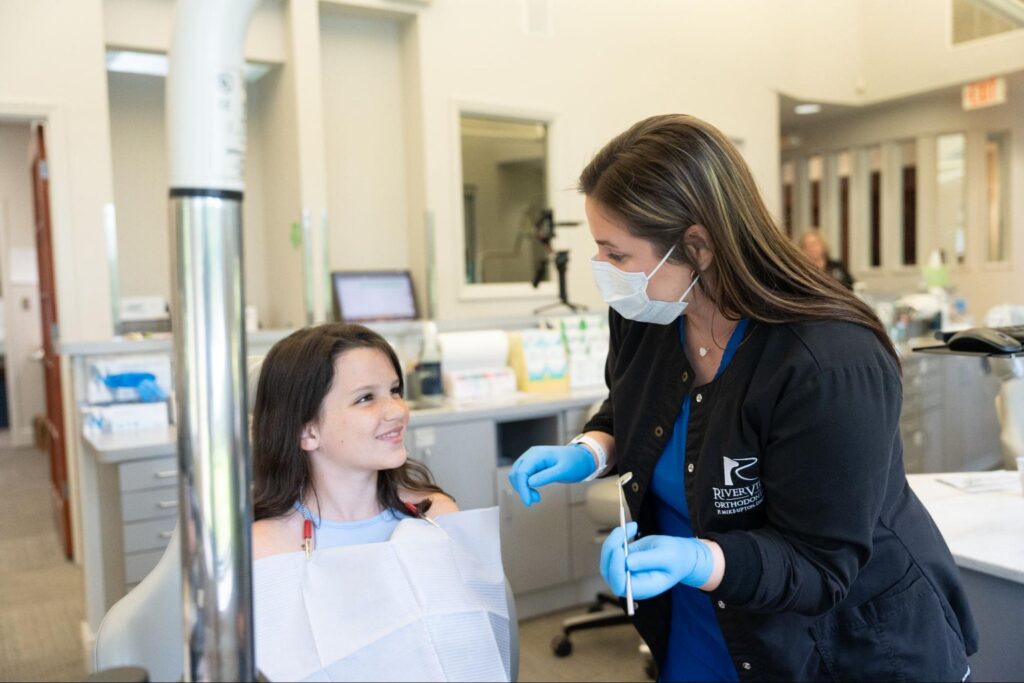
You should leave your consultation with a clear understanding of your diagnosis, your treatment options, and what comes next. The team itself matters too. From the front desk to the clinical assistants, everyone should treat you like family.
- Clear communication. You should understand your options and next steps before you leave the consultation.
- Strong patient reviews with consistent high ratings mentioning the orthodontist by name, the team, and the overall experience.
- A comfortable and relaxing atmosphere. A warm environment makes a real difference during longer visits.
- An attentive, friendly team. At RiverView Orthodontics, “Your family is our family” guides every interaction.
- Convenient location with reasonable visit availability. Treatment lasts months, so proximity and scheduling flexibility save real time.
Comparing Orthodontic Treatment Options
Different smiles call for different solutions. Here’s a side-by-side look at the main treatment options available at RiverView Orthodontics.
| Treatment | Appearance | Best For | Typical Length | Key Consideration |
|---|---|---|---|---|
| Traditional Metal Braces | Visible silver brackets | Complex cases, kids, teens, adults | 12–24 months | Most durable and effective for difficult corrections; In-Ovation® self-ligating brackets offer a more comfortable option |
| Clear Braces | Tooth-colored ceramic brackets | Teens and adults wanting a more subtle look | 12–24 months | More subtle than metal; slightly more fragile than traditional brackets |
| Invisalign® or spark® Clear Aligners | Nearly invisible plastic trays | Teens and adults with mild to moderate cases | 12–18 months | Removable for eating and brushing; requires wearing 20–22 hours per day |
| Orthodontic Jaw Correction | Combines braces with jaw treatment | Severe bite or jaw misalignment | Varies | Reserved for cases that cannot be corrected with braces or aligners alone |
Your ideal treatment depends on your bite, your goals, and your lifestyle. A free consultation with Dr. Upton is the clearest way to know which option fits you best.
Who Should Look for an Orthodontist? Candidacy Across Ages
Orthodontic care isn’t just for teenagers anymore. RiverView Orthodontics welcomes children, teens, and adults, and the right time to start depends on your situation.
- Children. The American Association of Orthodontists recommends a first orthodontic evaluation by age 7. Early visits don’t always mean early treatment, but they let Dr. Upton spot developing issues while the jaw is still growing.
- Teens. This is the most common age for braces or Invisalign Teen. Permanent teeth are in, and treatment often fits well around school and activities.
- Adults. Roughly 1 in 4 orthodontic patients today is an adult. It’s never too late to get a beautiful, straight smile.
Signs it may be time to see an orthodontist include crowded or crooked teeth, noticeable gaps, an overbite or underbite, jaw clicking or popping, difficulty chewing, or ongoing jaw discomfort that could point to TMJ issues.
If any of these sound familiar, a free consult is the easiest next step.
Frequently Asked Questions About Choosing an Orthodontist
How Can I Tell if an Orthodontist Is Good?
Look for three things: credentials, reviews, and communication. A good orthodontist is a licensed specialist (ideally ABO board-certified), has consistent positive reviews that mention specific experiences, and takes time to explain your options clearly without pressure. If you feel rushed or confused after a consultation, keep looking.
How Do I Choose the Right Orthodontist for Me?
Start with a free consultation at one or two local practices. Compare credentials, treatment options, technology, and office atmosphere. Trust your gut on how you and your family feel with the orthodontist and team. A good fit matters because you’ll be visiting regularly for months.
What Are Signs an Orthodontist Might Not Be the Right Fit?
Watch for high-pressure sales tactics, vague answers to your questions, outdated technology, lack of specialist credentials, or inconsistent patient reviews. A good orthodontist will give you time to think, explain your treatment plan clearly, and never push you into same-day decisions you aren’t ready for.
How Long Does Orthodontic Treatment Typically Take?
Most orthodontic treatment lasts between 12 and 24 months, though shorter and longer cases exist. The timeline depends on how much tooth and jaw movement is needed, which treatment type you choose, and how consistently you follow care instructions, especially for Invisalign wear time.
Dr. Mike Upton and the friendly team at RiverView Orthodontics welcome new families at both of our offices in Tuscaloosa and Demopolis. Our Tuscaloosa office is at 815 Rice Mine Rd N. and can be reached at (205) 752-4343. Our Demopolis office is at 933 US-80 W and can be reached at (334) 287-0200. From our family to yours, we’re here to help you find the right fit, the right treatment, and the right smile for life.
Learn more or request a free consult when you’re ready to start your smile journey.